The History of Hawaiian Chocolate
When people think of Hawaii, chocolate may not be the first thing that comes to mind. But hidden among the lush valleys and volcanic soil of the islands is a growing legacy that connects Hawaii to the ancient traditions of cacao.
Hawaii is the only state in the U.S. where cacao—the foundation of all chocolate—can be commercially grown, and over the years, the islands have cultivated a distinctive craft chocolate industry rooted in sustainability, heritage, and quality.

Cacao: The Ancient Origin of Chocolate
The story of chocolate starts thousands of years ago in the rainforests of Central and South America. Indigenous civilizations like the Olmecs, Mayans, and Aztecs revered cacao for its ceremonial significance and invigorating properties. The botanical name Theobroma cacao means “food of the gods,” underscoring its cultural and nutritional value. Cacao beans were once used as currency and were central to ritual drinks that carried spiritual meaning.
Around the 1500s, European explorers introduced cacao to the Old World. Initially, it was a bitter ceremonial drink, but slowly it became the sweet, processed chocolate we all love today. However, it took several centuries for cacao to reach Hawaii.
Cacao’s Arrival in Hawaii
The first documented cacao trees arrived in Hawaii in the 1830s, during a period of agricultural experimentation. However, sugar cane and pineapple dominated the state’s economy, and cacao remained in the background. It wasn’t until the 1990s, after sugar mills began to close, that a new generation of farmers began seeking crops like cacao that were sustainable and high-value.
Hawaii’s tropical climate, rich volcanic soil, and natural biodiversity provide optimal conditions for growing premium cacao. As the craze for ethically sourced chocolate grew among people, Hawaii became the perfect place for specialty chocolate farming.
Why Hawaiian Cocoa Is Different
Hawaiian cocoa stands apart from chocolate produced elsewhere due to:
- Microclimate influence: The volcanic terrain and ocean proximity lend unique tasting notes.
- Sustainable methods: Hawaii’s small-scale chocolate farms focus on organic, pesticide-free cultivation.
- Ethical standards: Hawaii leads the chocolate world in fair wages and clean labor practices.
Because of these qualities, Hawaiian chocolate is not only rich in taste but is also associated with strong values. At Perelendra Farms, our Kauai-based cocoa farm produces chocolate that reflects both the spirit of Hawaii and high-quality craftsmanship.
The Craft Chocolate Movement in Hawaii
As demand for ethical and transparent food products increased, Hawaii’s chocolate industry blossomed. When cacao farming began to spread in the islands of Hawaii, local bean-to-bar makers began making chocolate in small batches, which celebrates the local flavor, i.e., terroir.
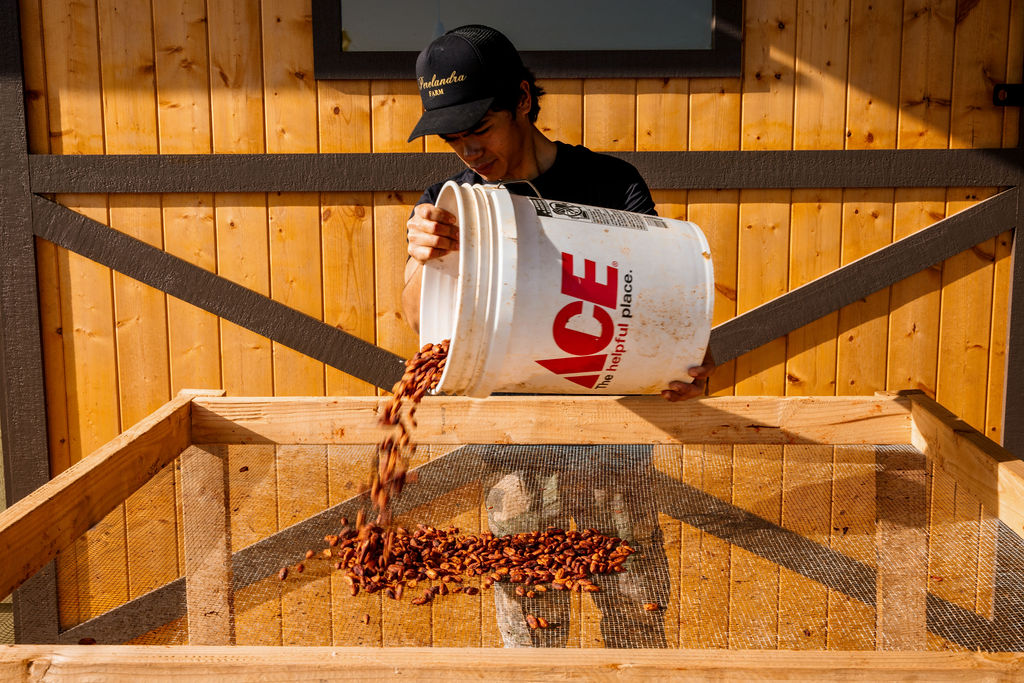
Perelandra Farms is proud to be part of this movement. We use regenerative practices at our chocolate farm to protect the land while also producing high-quality Hawaiian cocoa. Every step — whether it’s harvesting the cacao pods or hand-tempering the chocolate — is done locally to keep the taste original and to take into account the environment.
Supporting Local, Savoring Quality
When you purchase from a Hawaiian chocolate farm like Perelandra Farms, you’re doing more than enjoying a sweet treat:
- You support sustainable Hawaiian agriculture
- You encourage fair, transparent supply chains
- You experience the unique taste of island-grown cacao
A Bright Future for Hawaiian Chocolate
The story of Hawaiian chocolate is still being written. As people begin to value artisanal food and the environment, Hawaiian chocolate is moving ahead in both taste and ethics. With each bar, you’re tasting centuries of cacao history and the modern innovation of Hawaii’s dedicated farmers.
Discover the history. Celebrate the flavor. Choose Perelandra Farms.